
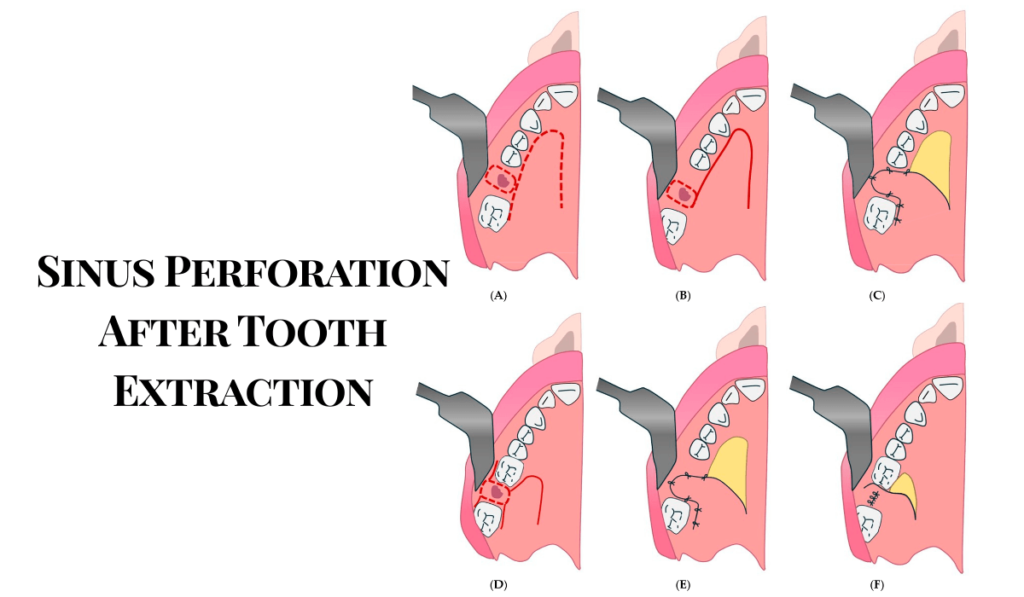
Tooth extraction is a common dental procedure, but sometimes complications can occur. One of the rarer yet significant complications is sinus perforation, also known as an oroantral communication. This occurs when a tooth extraction, usually in the upper jaw, creates an opening between the oral cavity and the maxillary sinus. Understanding the causes, signs, and treatment options can help prevent further issues and ensure proper recovery.
What Is Sinus Perforation?
The maxillary sinuses are air-filled cavities located behind your cheekbones, above your upper teeth. In some individuals, the roots of the upper teeth—especially molars and premolars—are very close to these sinuses. During extraction, a small hole or tear can occur, connecting the sinus to the mouth.
This opening is called a sinus perforation or oroantral communication. If left untreated, it can lead to infections, chronic sinus issues, or the formation of a persistent sinus tract.
Common Causes of Sinus Perforation
Several factors can contribute to sinus perforation after tooth extraction:
- Anatomical Proximity – Upper molars and premolars often have roots that nearly touch or slightly protrude into the maxillary sinus.
- Difficult Extractions – Teeth impacted by infection, decay, or unusual root shapes can increase the risk.
- Pre-existing Sinus Conditions – Chronic sinusitis or thin sinus walls may make perforation more likely.
- Improper Technique – Aggressive force or incorrect tools during extraction can accidentally breach the sinus.
Signs and Symptoms
Not all sinus perforations are immediately obvious, but some common warning signs include:
- Air or fluid passing from mouth to nose – Especially when drinking or blowing your nose.
- Persistent sinus pain or pressure – Often on the side of the extraction.
- Nasal congestion or discharge – Sometimes with a foul smell if infection develops.
- Altered speech or whistling sound – A small opening can cause air leakage when speaking.
- Delayed healing at the extraction site – The gum may appear inflamed or fail to close properly.
If you notice any of these symptoms after extraction, contact your dentist immediately.
Diagnosis
A dentist or oral surgeon will confirm sinus perforation using:
- Clinical Examination – Checking for visible holes or air passage between mouth and sinus.
- Imaging Tests – Panoramic X-rays or cone-beam CT scans help visualize the sinus and tooth roots.
- Functional Tests – Gentle blowing or drinking tests under supervision can detect small communications.
Treatment Options
Treatment depends on the size and severity of the perforation:
1. Small Perforations
- Often close on their own with proper care.
- Instructions: Avoid sneezing, blowing your nose, or sucking through straws.
- Medications: Antibiotics and decongestants may prevent infection.
2. Larger or Persistent Perforations
- Surgical closure may be necessary. Common techniques include:
- Buccal Flap Surgery – Using gum tissue to cover the opening.
- Palatal Flap – Tissue from the roof of the mouth may be used for closure.
- Bone Grafts – Occasionally required for structural support.
Postoperative care includes careful oral hygiene, avoiding pressure changes, and monitoring for infection.
Recovery and Healing
- Healing Time – Small perforations may heal in 2–4 weeks. Larger surgical repairs can take 4–6 weeks or longer.
- Follow-Up – Regular dental check-ups are essential to ensure proper healing.
- Lifestyle Tips:
- Avoid smoking, which delays healing.
- Maintain a soft diet to prevent trauma at the extraction site.
- Use saline nasal sprays to keep sinuses clear.
Complications If Left Untreated
Ignoring a sinus perforation can result in:
- Chronic sinus infections
- Oroantral fistula formation – A permanent connection between mouth and sinus
- Bone infections or tooth loss
- Persistent discomfort and nasal discharge
Timely diagnosis and treatment are crucial to prevent these complications.
Prevention Tips
- Pre-Extraction Planning – Dental imaging can assess the proximity of roots to the sinus.
- Experienced Dentists – Complex extractions should be done by skilled oral surgeons.
- Gentle Technique – Controlled force and correct instruments reduce risks.
- Patient Cooperation – Following post-extraction instructions is vital to avoid pressure changes.
Key Takeaways
Sinus perforation after tooth extraction is uncommon but serious. Recognizing the signs early, seeking prompt treatment, and following proper care instructions can ensure complete healing and prevent long-term complications.
For patients with persistent symptoms like fluid passage from the mouth to the nose or chronic sinus pain, early consultation with a dental professionalis essential.
FAQs
1. Which teeth are most likely to cause sinus perforation?
Upper molars and premolars are most at risk due to their proximity to the maxillary sinuses.
2. How can I tell if I have a sinus perforation?
Look for air or fluid passing between your mouth and nose, pain, swelling, or delayed healing at the extraction site.
3. Can sinus perforation heal on its own?
Small perforations often heal with careful management, but larger openings may require surgical repair.
4. Is sinus perforation dangerous?
If untreated, it can cause chronic sinus infections, persistent pain, or formation of an oroantral fistula.
5. What should I avoid after tooth extraction?
Avoid blowing your nose, sneezing forcefully, using straws, or smoking to prevent worsening the perforation.
6. How long does recovery take?
Small perforations may heal in 2–4 weeks, while surgical repairs can take 4–6 weeks or more.
7. Can I prevent sinus perforation?
Yes, careful planning, proper imaging, skilled extraction techniques, and following post-extraction instructions can minimize the risk.
8. Should I see a dentist immediately if I suspect a perforation?
Absolutely. Early intervention improves healing outcomes and prevents complications.
9. Are antibiotics necessary?
Yes, antibiotics are often prescribed to prevent sinus infections after perforation.
10. Will sinus perforation affect future dental work?
If treated properly, it usually does not affect future dental procedures or oral health.